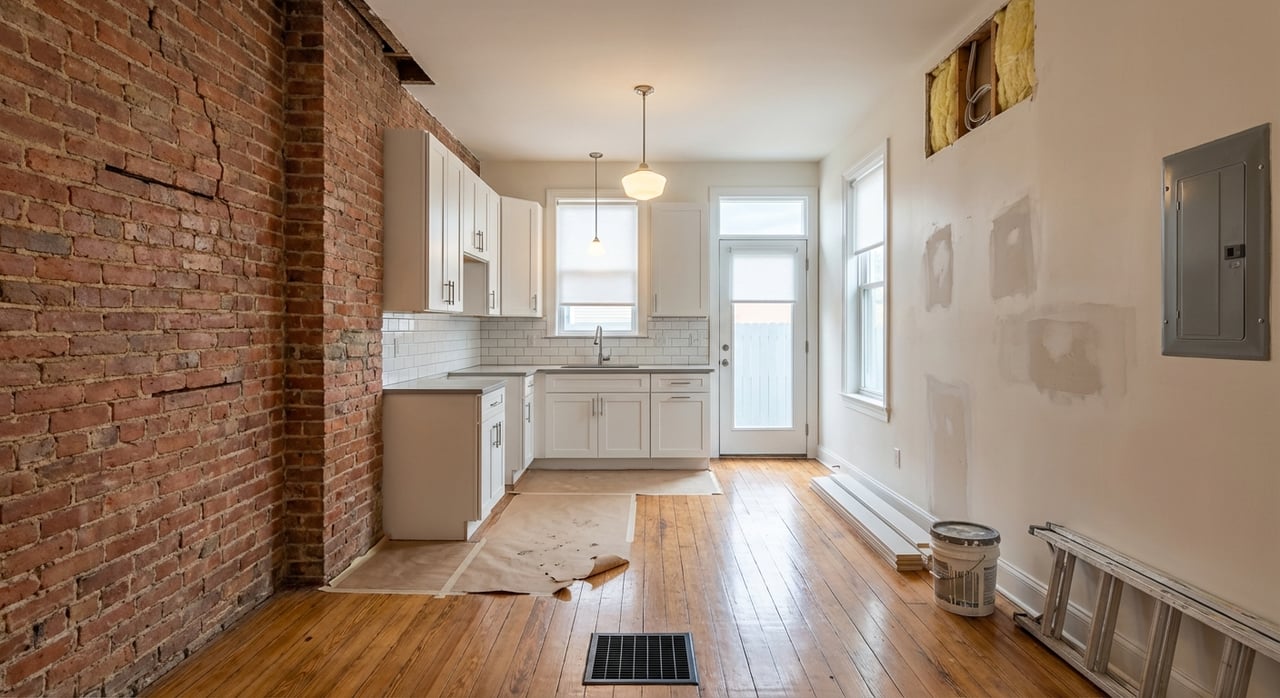
Renovating a Harrisburg rowhome can unlock serious value, but the right plan matters. Between historic details, older systems, and city permitting, small misses can turn into delays or budget shocks. In this guide, you’ll learn local cost ranges, permit and historic rules, common repair risks, and how upgrades translate to resale and rent. Let’s dive in.
Harrisburg market numbers to know
Before you set a budget, anchor your plan to local prices and rents. The typical Harrisburg home value sits near $255,000 as of data through January 2026, with recent median sale prices around $226,000. You can review current city trends on the Zillow Harrisburg market page for context (Zillow Harrisburg values).
On the rent side, typical asking rents often land near 1,300 to 1,400 dollars per month citywide. For voucher-eligible caps and a second data point, check HUD’s Small Area Fair Market Rents, where two-bedroom FMRs in Harrisburg ZIPs run roughly 1,200 to 1,500 dollars (HUD FMR by ZIP). Use these figures as guideposts for after-repair value and rental underwriting.
What a typical rehab costs here
Every rowhome is unique, but older brick houses in Midtown, Uptown, and nearby historic districts share patterns: aging systems, roof and masonry needs, and exterior details that cost more to restore. Use the ranges below as planning markers, then confirm with local contractor bids.
Three scope tiers for a 1,000–1,500 sq ft rowhome
- Cosmetic refresh: 15,000–40,000 dollars. Paint, refinished floors, lighting and hardware swaps, minor patching, and a light kitchen or bath tune-up. Limited system work.
- Moderate renovation: 60,000–120,000 dollars. New midrange kitchen and bath, select window or roof replacement, some electrical or plumbing updates, modest layout tweaks, and targeted exterior repairs.
- Major or gut rehab: 120,000–300,000+ dollars. Full system overhauls, structural repairs, significant exterior restoration, floor plan changes, and high-sensitivity historic work.
As a second way to think about it, many planners budget roughly 10–50 dollars per square foot for cosmetic work, 40–100 dollars per square foot for moderate projects, and 100–200+ dollars per square foot for gut or historic rehabs. Older homes hide surprises, so keep a 10–25 percent contingency for concealed wiring, plumbing, rot, or permit-driven corrections.
Spot costs and resale context
To pressure-test your line items, compare against recognized job-level benchmarks. The 2025 Cost vs. Value analysis shows a minor midrange kitchen averaging about 28,458 dollars with a national cost recoup near 113 percent, a midrange bath around 26,138 dollars at roughly 80 percent recoup, vinyl window replacement near 22,073 dollars at about 76 percent recoup, asphalt shingle roofing at about 31,871 dollars and roughly 68 percent recoup, and basement finishing at about 52,012 dollars and 71 percent recoup. See the full list for context and regional nuances (2025 Cost vs. Value).
For older systems, single items can swing your budget. Electrical panel upgrades or full rewiring, boiler or steam system replacements, foundation corrections, and masonry or cornice restoration often add tens of thousands. Price these early so you can set the right scope tier.
Permits, codes, and historic review
When a permit is required
Harrisburg’s Bureau of Codes requires permits for many common projects. Triggers include any work exceeding 1,000 dollars in value, roofing, replacement windows and doors, decks and fencing, structural work, and all electrical and plumbing performed by licensed trades. Always verify your project specifics with the City’s permit guidance (City of Harrisburg Codes).
How long approvals take and what to expect
The Bureau of Codes states residential permit applications must be approved within 15 business days. If your documents are stamped by a licensed design professional, reviews can be as fast as 5 business days. Historic review, zoning, or engineering requirements can add time. In practice, plan for 2 to 6 or more weeks from application to approval depending on complexity and submittals.
Historic districts and HARB review
If your rowhome sits in a municipal historic district, exterior work visible from a public right-of-way typically requires a Certificate of Appropriateness and review by the Historic Architectural Review Board before permits can be issued. The City publishes design guidelines and HARB meets monthly, so factor that cadence into your schedule and start early with concept reviews (Harrisburg Historic Preservation).
State UCC considerations for historic buildings
Pennsylvania’s Uniform Construction Code has specific pathways for historic buildings. Older structures can qualify for certain relief, but Level 2 or Level 3 alterations, or a change in use, still require permits and documentation by a licensed architect or engineer. For substantial rehabs, expect to provide professional reports that show how you will meet code or propose acceptable alternatives (PA UCC for Historic Buildings).
Common issues in older Harrisburg rowhomes
Masonry, roofs, and water management
Historic brick facades often need repointing, and aging steel lintels can deflect or rust. Roofs and chimneys can be significant line items, particularly where slate or metal was replaced in pieces over time. In basements, watch for efflorescence, prior patching, and hydrostatic pressure that may need a sump, drains, waterproofing, and active dehumidification.
Electrical and plumbing systems
It is common to find older wiring or undersized electrical service in late-19th and early-20th-century homes. Many insurers restrict coverage when knob-and-tube wiring remains, which makes a full electrical evaluation and plan essential. On plumbing, galvanized supply and cast-iron drains age unpredictably. A sewer camera scope is a small upfront cost that can prevent an expensive surprise.
Lead paint and asbestos safety
If the home was built before 1978, assume lead-based paint is present. When contractors disturb painted surfaces, EPA Renovation, Repair and Painting rules apply and require certified firms to follow lead-safe work practices. Learn the basics and what to ask of your contractor on the EPA’s lead page (EPA lead safety).
Asbestos-containing materials in older houses can include pipe insulation, some floor tiles, roofing felts, and certain mastics or adhesives. Disturbing these materials triggers strict testing, handling, and disposal requirements. Use accredited professionals for sampling and any abatement (EPA asbestos guidance).
Resale value and rental math
What tends to pay back at resale
For sellers, exterior and light interior updates often punch above their weight. National benchmarks indicate that a minor kitchen refresh, midrange bath update, and high-visibility exterior items like windows, roof, or entry elements commonly recover a larger share of their cost than luxury upgrades. Use the numbers from the Cost vs. Value report to calibrate finish levels to your block rather than over-improving for the neighborhood (2025 Cost vs. Value).
A simple yield check for rentals
If you buy near the current Harrisburg typical value of about 255,000 dollars and achieve a city-average rent around 1,355 dollars per month, your annual gross rent would be about 16,260 dollars. That is roughly a 6.4 percent gross yield and a gross rent multiplier near 15.7. If your location supports a two-bedroom rent closer to the upper end of HUD’s Small Area FMRs, say 1,500 dollars, gross yield rises to about 7.0 percent. Always adjust for operating costs, vacancy, capital reserves, and financing to estimate your true cap rate (Zillow Harrisburg values, HUD FMR by ZIP).
Financing and incentives for Harrisburg projects
Roll renovation into your mortgage
FHA 203(k) and conventional HomeStyle Renovation loans let you combine purchase and rehab into one mortgage, subject to scope and lender rules. In Pennsylvania, the Pennsylvania Housing Finance Agency lists Renovate & Repair and Purchase Improvement options that participating lenders offer. Review program basics and connect with a local lender familiar with these products (PHFA home improvement programs).
Historic tax credits for income-producing rehabs
If your project is income producing and the building qualifies, the federal Rehabilitation Investment Tax Credit can cover 20 percent of eligible rehabilitation costs. Pennsylvania also administers a state historic preservation tax credit with its own application, review, and caps. Get familiar with forms, timelines, and standards before you design your scope (PA SHPO forms and guidance).
Example budgets for an Old Uptown rowhome
Here is a planning sketch for a late-19th-century brick rowhome around 1,300 square feet in Old Uptown. Numbers are illustrative only and assume labor by licensed trades where required.
- Cosmetic refresh: about 30,000 dollars. Interior paint, floor refinishing, lighting, minor plaster repair, a basic appliance package, and light bath updates. Timeframe 4–8 weeks. Expected impact: better first impressions and shorter days on market.
- Moderate renovation: about 85,000 dollars. New midrange kitchen, a full bath update, partial window replacement, modest roof repairs, targeted electrical and plumbing updates, and repointing at the front facade. Timeframe 3–5 months including permits. Expected impact: broader buyer pool and stronger ARV relative to nearby comps.
- Major rehab: about 200,000 dollars. Full electric rewire and panel upgrade, new plumbing lines, boiler replacement with radiator work, roof and chimney overhaul, structural corrections, full window package, significant facade restoration, and layout tweaks. If in a municipal historic district and exterior work is visible, add HARB review and allow added time. Timeframe 6–12 months.
Use neighborhood comps near Harrisburg’s current typical value of about 255,000 dollars to calibrate finishes that the market will support. Be careful not to outspend the likely resale on your block, especially if the latest median sale price sits below the city’s typical value in your submarket.
Quick Harrisburg renovation checklist
- Confirm property status: zoning, municipal historic district, and any recorded restrictions.
- Order inspections: full home inspection; structural engineer if settlement suspected; licensed electrical review; sewer camera scope; lead risk assessment for pre-1978 homes; asbestos survey if materials are suspect.
- Define scope in tiers and get three local bids for key trades.
- Build in 10–25 percent contingency for older-home surprises.
- Map the permit path: what requires permits, who must pull them, and the review timeline. If in a historic district, schedule HARB early.
- Tighten your underwriting: compare ARV to recent nearby sales; run rent scenarios against local market and HUD FMRs; stress test at plus or minus 10 percent.
- Pick a financing stack: cash, FHA 203(k), HomeStyle, or PHFA options; align timelines with lender draws and inspections.
A thoughtful, well-documented plan increases your odds of finishing on budget, getting approvals on time, and capturing the value you expect when you sell or rent.
Ready to weigh scope, budget, and likely returns on your Harrisburg rowhome? Let’s align your renovation plan with real comps, real timelines, and the right buyers or renters. Connect with Wendell Hoover to map your next best step.
FAQs
What does a Harrisburg rowhome renovation typically cost in 2026?
- For a 1,000–1,500 square foot home, plan about 15,000–40,000 dollars for cosmetic, 60,000–120,000 dollars for moderate, and 120,000–300,000+ dollars for major or historic-sensitive work, plus a 10–25 percent contingency.
Do I need a permit to replace windows or a roof in Harrisburg?
- Yes. Roofing and replacement windows and doors are listed permit triggers, along with any work over 1,000 dollars and all electrical and plumbing by licensed trades (City of Harrisburg Codes).
How long does HARB approval add for historic-district exterior work?
- HARB meets monthly, and the City’s standard residential permit review is up to 15 business days, so plan an added few weeks for application, review, and coordination depending on your submission quality and agenda timing (Harrisburg Historic Preservation).
What inspections should I order before buying a pre-1940 rowhome?
- Start with a full home inspection, then add structural, licensed electrical, and sewer camera scopes; include a lead risk assessment for pre-1978 homes and an asbestos survey if materials are suspect (EPA lead safety, EPA asbestos guidance).
Which upgrades usually deliver the best resale value in Harrisburg?
- Minor kitchen updates, midrange bath remodels, and visible exterior improvements like windows, roof, and entry elements often recoup more of their cost than luxury interior projects, per 2025 Cost vs. Value benchmarks (2025 Cost vs. Value).
Can I finance renovations with FHA 203(k) or PHFA programs?
- Yes. FHA 203(k), HomeStyle Renovation, and PHFA Renovate & Repair or Purchase Improvement options can roll rehab costs into your loan when you work with participating lenders (PHFA home improvement programs).