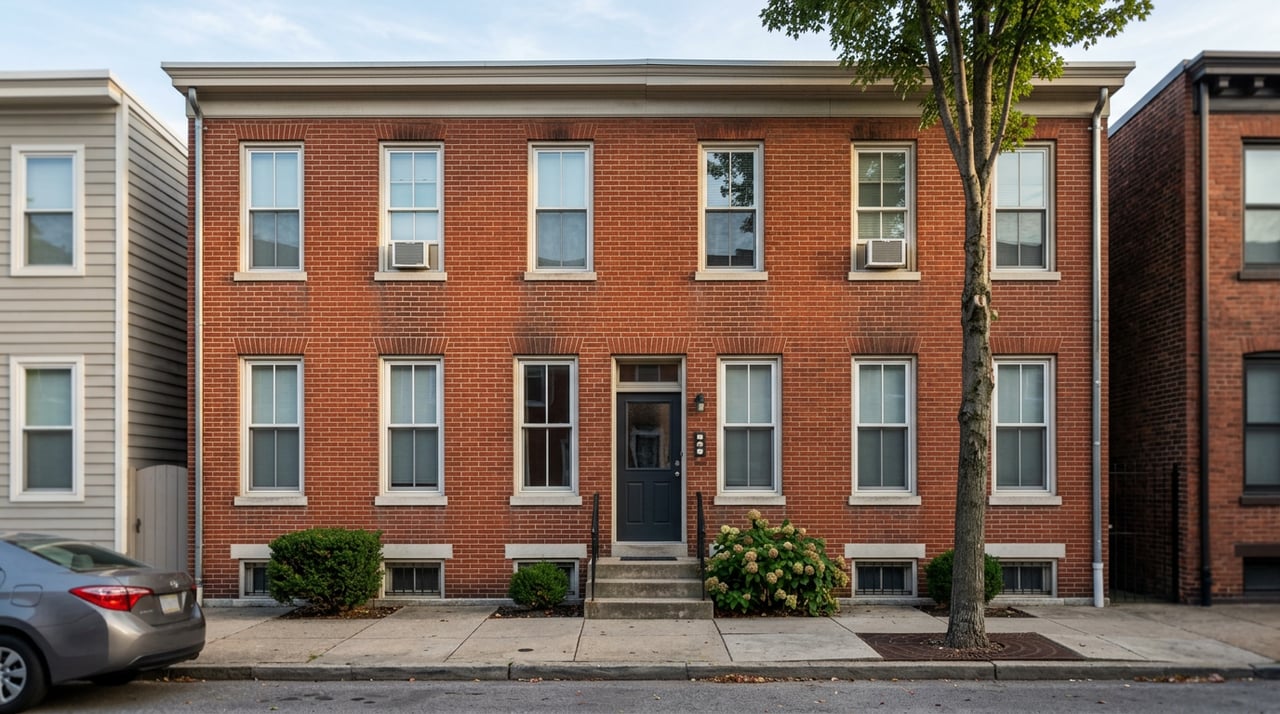
Thinking about buying a duplex or triplex in Harrisburg, but not sure how to run the numbers? You are not alone. Small multifamily investing can build steady income, yet it is easy to misjudge rents, expenses, or financing terms. In this guide, you will learn the essential steps to underwrite a 2–3 unit property, what rent and expense assumptions to use in Harrisburg, and how neighborhoods and loan choices change your outcome. Let’s dive in.
Why duplexes and triplexes in Harrisburg
Harrisburg’s renter share is high, which supports consistent tenant demand across many blocks. City apartment rents average around the low to mid $1,300s per month, based on current market data. That rent backdrop, paired with a for-sale market where many homes trade well below large-metro prices, makes small multifamily a practical entry point.
Recent reports show city average apartment rents near $1,383 per month, with typical 2-bedroom rents around $1,420 and 1-bedroom rents near $1,209. You can use those figures as underwriting anchors when you do not have recent nearby comps. Market growth is present but has moderated, so keep rent-growth assumptions conservative.
- City rent trends and bedroom medians: see the Harrisburg overview on RentCafe. Harrisburg rent data
- HUD Fair Market Rent check: the Harrisburg–Carlisle MSA lists a 2-bedroom FMR around $1,371 for FY2025. HUD FMR reference
- National trend context: industry reporting shows Harrisburg among markets with positive rent momentum in 2024 and into 2025, with broader moderation later in 2025. Yardi Matrix market report
Rents and comps you can use
Use verified local sources for unit-level rents:
- City benchmarks: 1-bed about $1,209, 2-bed about $1,420, 3-bed about $1,903. These are helpful when modeling typical duplex mixes like 1-bed over 2-bed.
- FMR guardrail: if you underwrite well above the local 2-bed FMR of about $1,371, confirm strong, recent comparables to support your pro forma.
Tip: Pull several active and recent rented listings for the exact subarea, building style, and finish level. Adjust for utilities, parking, and laundry.
Underwrite the deal: step-by-step
Use this simple checklist to size up any Harrisburg duplex or triplex. Then verify each line item for the specific property.
- Potential Gross Rent (PGR) = sum of monthly market rents for each unit × 12.
- Vacancy and collection loss = subtract 5–8 percent to get Effective Gross Income (EGI). Choose the lower end for renovated, central locations and the higher end for older stock or higher-turnover blocks. Local rent context
- Operating expenses = taxes, insurance, owner-paid utilities, repairs and maintenance, management, legal, and reserves. Subtract this from EGI to get Net Operating Income (NOI).
- Cap rate = NOI ÷ purchase price.
- Cash-on-cash return = (NOI − annual debt service) ÷ cash invested.
- DSCR = NOI ÷ annual debt service.
Harrisburg starter assumptions to plug in
These are screening ranges. Always verify per property.
- Vacancy and collection: 5–8 percent based on location and unit condition.
- Operating-expense ratio: 40–50 percent of EGI for small multifamily is a practical baseline. Smaller buildings vary more due to age, utilities, and turnovers. Rule-of-thumb overview
- Insurance: budget about $800 to $2,000+ per year, depending on age, size, and liability profile. Get a local quote.
- Management: 7–9 percent of collected rent if you outsource, with some leasing fees at turnover. PA management fee ranges
- Repairs and maintenance: 5–10 percent of EGI. Older systems push to the higher end.
- Reserves/CapEx: set aside $300–$600 per unit per year for longer-term replacements.
- Owner-paid utilities: include water, sewer, trash, and any master-metered electric or gas, if applicable.
- Secondary income: laundry, storage, or parking can add about $20–$50 per unit per month.
Worked examples with Harrisburg numbers
Use these examples to follow the math. Recreate them with a property’s real rent roll, tax bills, utility history, and a lender quote.
Example A: duplex near city center, conservative underwriting
- Assumed market rents from city medians: 2-bed at $1,420 and 1-bed at $1,209. Bedroom medians
- PGR = ($1,420 + $1,209) × 12 = $31,548.
- Vacancy and collection at 6 percent = −$1,893. EGI = $29,655.
- Expenses at 45 percent of EGI for an older duplex = $13,345.
- NOI = $16,310.
- If purchase price is $250,000, cap rate = $16,310 ÷ $250,000 = 6.52 percent.
- 25 percent down ($62,500) and illustrative 30-year financing with annual debt service about $14,220 yields DSCR near 1.15. Pre-tax cash-on-cash = ($16,310 − $14,220) ÷ $62,500 ≈ 3.3 percent.
What it means: the cap rate is workable, but immediate cash flow can be thin at today’s rates. This scenario can fit an owner-occupant who values housing cost offset, or a buyer planning targeted upgrades to lift rents and reduce expenses.
Example B: triplex, value-add potential
- Three 2-bed units at $1,300 each as a blended market assumption.
- PGR = $46,800. Vacancy and loss at 7 percent yields EGI = $43,524.
- Expenses at 48 percent of EGI = $20,891. NOI ≈ $22,633.
- If purchase price is $300,000, cap rate = $22,633 ÷ $300,000 ≈ 7.5 percent.
What it means: triplexes can offer better cap rates per purchase dollar when unit count supports income and you buy well.
Cap rates and value, side by side
For small multifamily in secondary and tertiary markets, many investors use a 6 to 9 percent cap-rate band as a quick benchmark. Cap rates move with interest rates and investor demand. Cap-rate explainer
If your property’s NOI is $20,000, here is how pricing shifts by cap rate:
| Cap rate | Implied value |
|---|---|
| 6% | $333,333 |
| 7.5% | $266,667 |
| 9% | $222,222 |
This is why accurate NOI and realistic neighborhood assumptions matter. The same income supports very different values as the market’s required return changes.
Financing paths for 2–4 units
Your loan choice shapes cash flow and approval odds. Pre-qualify with multiple lender types before you write offers.
- FHA for owner-occupants: You can finance 2–4 units with as little as 3.5 percent down if you will live in one unit. For triplexes and fourplexes, lenders apply a self-sufficiency test, and FHA has property condition and appraisal rules to meet. Verify current loan limits for Dauphin County. FHA 2–4 unit overview
- Conventional options: Some lenders offer low down payments on owner-occupied 2–4 units, but requirements vary by lender and by property. Ask a local mortgage pro who regularly closes small-multifamily loans.
- DSCR and portfolio loans for investors: Non-owner buyers often use DSCR loans that rely on the property’s income. Typical features include 20–30 percent down and DSCR minimums around 1.0 to 1.25. DSCR loan basics
Rate sensitivity example: On a $187,500 loan amount for 30 years, a 0.5 percent rate change can move the monthly payment by roughly $60 to $70. That shift alone can change your DSCR and your cash-on-cash return.
Neighborhood snapshots that affect underwriting
Harrisburg is a block-by-block market. Underwrite with the right rent and vacancy for the subarea.
- Downtown and the Capitol Complex: Proximity to state offices and downtown employers supports demand for renovated units. Vacancy tends to be lower for well-finished apartments. Use these rents as a high end for city underwriting when condition is comparable.
- Midtown, Italian Lake, Old Uptown: Walkability and short commutes draw many renters. Updated small multifamily in these areas often aligns with city average rents. Inventory quality varies, so verify finish level and utilities in your comps.
- Allison Hill, including South Allison Hill: Rents are usually lower and operating risk can be higher due to turnover and building age. There are active community and revitalization efforts that create value-add opportunities for well-capitalized owners. Document your rehab scope and lease-up plan. Community coverage
- Uptown and East Harrisburg: Mixed streets with stable pockets. Entry prices can be more approachable than Midtown, with rents that vary by block. Use conservative rent and vacancy when condition is dated.
- East Shore suburbs, such as Lemoyne, Wormleysburg, Camp Hill, and Lower Paxton: These nearby areas often attract longer-term renters tied to hospitals and corporate employment. Prices can be higher, cap rates can be lower, and turnover may be less frequent. Underwrite with submarket-specific comps.
Due diligence checklist for Harrisburg
Use this quick list before you go firm on a deal.
- Pull the parcel and recent tax bills from the Dauphin County property viewer. City and school taxes may be separate, so model both.
- Confirm legal unit count and compliance with zoning and the City of Harrisburg’s rental rules. Check whether a rental registration or inspection is required, and budget any fees and likely punch-list items.
- Request 12 months of water, sewer, trash, electric, and gas bills for each unit. Identify any master-metered utilities.
- Get three contractor quotes for immediate items like roof, HVAC, plumbing, or safety repairs. Add these to your CapEx plan.
- Obtain a local insurance quote early. Insurance can materially change cash flow, especially for older brick or row properties and for parcels near flood zones.
- Verify tenant history, collect the rent roll and signed leases, and confirm security deposits held.
Simple sensitivity to test
Focus on the three variables that move your returns most.
- Purchase price: Every $10,000 you negotiate off price adds roughly 0.3 to 0.4 percentage points to cap rate if NOI is unchanged.
- Interest rate: A 0.5 percent change can swing DSCR and cash-on-cash more than any other single input on leveraged deals. Recheck payments before you remove financing contingencies.
- Property taxes: Model the actual current bills, and ask about reassessment risk after sale. Taxes are often the largest variable expense for city assets.
A practical next step
If you are screening a duplex or triplex now, start with this sequence: pull rent comps and FMR as a reasonableness check, download real tax bills, price insurance, plug 5–8 percent vacancy and a 40–50 percent expense ratio, and test your deal at 6, 7.5, and 9 percent cap rates. Then talk to an FHA-capable lender if you plan to live in one unit, and a DSCR or portfolio lender if you will not.
When you want local, investor-minded help to source, underwrite, and execute in the Harrisburg market, connect with the team that does this every week. Reach out to Wendell Hoover to schedule a consultation.
FAQs
What are typical Harrisburg duplex and triplex rents today?
- City-wide averages suggest around $1,383 per unit across apartments, with 1-bed near $1,209, 2-bed near $1,420, and 3-bed near $1,903, which you can use as a baseline for underwriting.
How much vacancy should I assume for Harrisburg small multifamily?
- A 5–8 percent vacancy and collection loss range works for most screening, with the lower end for renovated central units and the higher end for older stock or higher-turnover areas.
What expense ratio should I use when I do not know exact bills?
- Start with 40–50 percent of EGI for small multifamily to cover taxes, insurance, repairs, management, and reserves, then replace estimates with actuals from the seller.
What cap rate should I target in Harrisburg for 2–4 units?
- Many investors screen deals between 6 and 9 percent cap rates, with higher cap rates for higher-risk locations or heavy value-add projects and lower cap rates for stabilized assets.
Which loans work best for a first-time buyer of a duplex or triplex?
- If you will live in one unit, FHA can allow as little as 3.5 percent down on 2–4 units, subject to loan limits and property standards; if you will not, a DSCR or portfolio loan is common for investors.